
The Russia-Ukraine crisis, along with general bullishness in agricultural commodities, has ensured that after a fairly long time, most of the 24 commodities for which the Centre declares the minimum support price (MSP) are trading above it. The exceptions here are chana or gram and a few varieties of pulses. This might gladden the farmers, especially those who are still holding on to their stocks from the previous kharif harvest or are harvesting the latest rabi crop. But this could stoke retail and wholesale inflation.

Critics who cannot stop gloating, pronouncing Modi to be a lame-duck prime minister, may be making a huge mistake, predicts Virendra Kapoor.

India has demanded resumption of export benefits to certain domestic products under GSP, and greater market access for its products from sectors like agriculture, automobile, auto components and engineering. On the other hand, the US wants greater market access for its farm and manufacturing products, dairy items and medical devices, data localisation, and import duties cut on some ICT products.

Prime Minister Modi has certainly pulled back, and his political capital -- dependent as it is on an image that he knows best and never retreats -- may have taken a bit of a beating. But, equally, it is hard to say that the protesters have 'won', argues Mihir S Sharma.

There will be uncertainty about outcomes,but one must hope for the best, observes T N Ninan.

Releasing a report titled 'Profiting from Pain' in Davos, the rights group further said as the cost of essential goods rises faster than it has in decades, billionaires in the food and energy sectors are increasing their fortunes by $1 billion every two days.
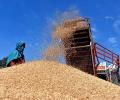
India is looking to tap its diplomatic missions abroad to enable grain exporters in the country to ship out wheat and corn as supplies from Russia and Ukraine are expected to remain disrupted for some time to come. Between the two items, pushing for wheat is easier because of a huge domestic surplus. "We are hand holding our exporters and support from various Indian missions abroad is also being channelised accordingly," a senior government official said. Global wheat prices have jumped since the Ukraine crisis started, with wheat futures in the US reaching their highest levels since 2008.

Chief economist at State Bank of India has revised downward the full-year growth forecast to a low 6.8 per cent from 7.5 per cent earlier for FY2023, citing "the way below GDP numbers for the first quarter". The National Statistical Office on Wednesday released the Q1 growth numbers which showed a consensus growth of 13.5 per cent, pulled down by the poor show of the manufacturing sector, which reported a paltry 4.8 per cent expansion in the first three months of FY23, negating the robust show by the services sector. Consensus forecast was 15-16.7 per cent of which the RBI made the highest forecast of 16.7 per cent.

A closer look at the data reveals that a lot of the items are not part of this calculation. The notable ones include buffalo meat, marine exports, raw cotton, and plantation crops such as tea, coffee, rubber, etc.

The dairy major is transforming into a full-fledged F&B and fast moving consumer goods (FMCG) player, reports Vinay Umarji.

In his second term in office, UP Chief Minister Yogi Adityanath has retained 34 portfolios.

'The government is trying to kickstart the investment cycle in India and while the corporate investments are yet to gather momentum, there are early signs of the same.'

'Nothing will stop India's top three-four corporates who have become aggressive players in the agri-markets after Modi came to power from acting in concert to drive down at will the prices at which they buy from farmers.' 'These corporate houses have the wherewithal to purchase all the farm produce at low prices and store them for a long period of time.' 'Once the harvest season is over they will sell the same produce at higher prices.'

'If a company contracts to buy its produce after three or four months, is there any loss in it?'
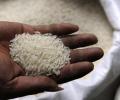
A 6-7 million tonnes shortfall in rice production due to a fall in paddy sowing area is likely to keep rice prices at elevated levels, adding to the inflationary pressure that the slowing economy is already grappling with. Elevated food prices, including that of cereals, had led to retail inflation reversing a three-month declining trend, to touch 7 per cent in August. Similarly, the wholesale price inflation, which declined to 11-month low, also showed price pressures from cereals resulting from wheat output being impacted by severe heat waves in some parts of the country.

SAD chief Sukhbir Singh Badal announced the decision to snap ties with the NDA on Saturday night, amid stepped up agitation by farmers in Punjab over the three legislations which were recently passed by Parliament amid Opposition protests.

Since 2014, the public sector banks' branch network in rural and semi urban has grown by a mere 4,000 while for private sector banks, it doubled from 9,673 to 18,437.

Union minister Narendra Singh Tomar on Sunday reiterated that the Centre was ready to talk to the farmers protesting against the new agriculture laws, and said that mere gathering of crowd does not lead to revocation of legislations.

The Punjab CM's reaction has come after Khattar alleged on Saturday alleged that despite wanting to talk to him over the issue, he did not respond even when telephone calls to his office were made for three days.
In April, RBI had projected retail inflation to be around 5 per cent.
Prime Minister Narendra Modi's landslide election in 2014 raised hopes he would draw a line under India's socialist past, cut welfare and reduce the government's role in business.
